
Buying or Owning a Home
Residential Home Inspection
Quick answer
What is a residential home inspection?
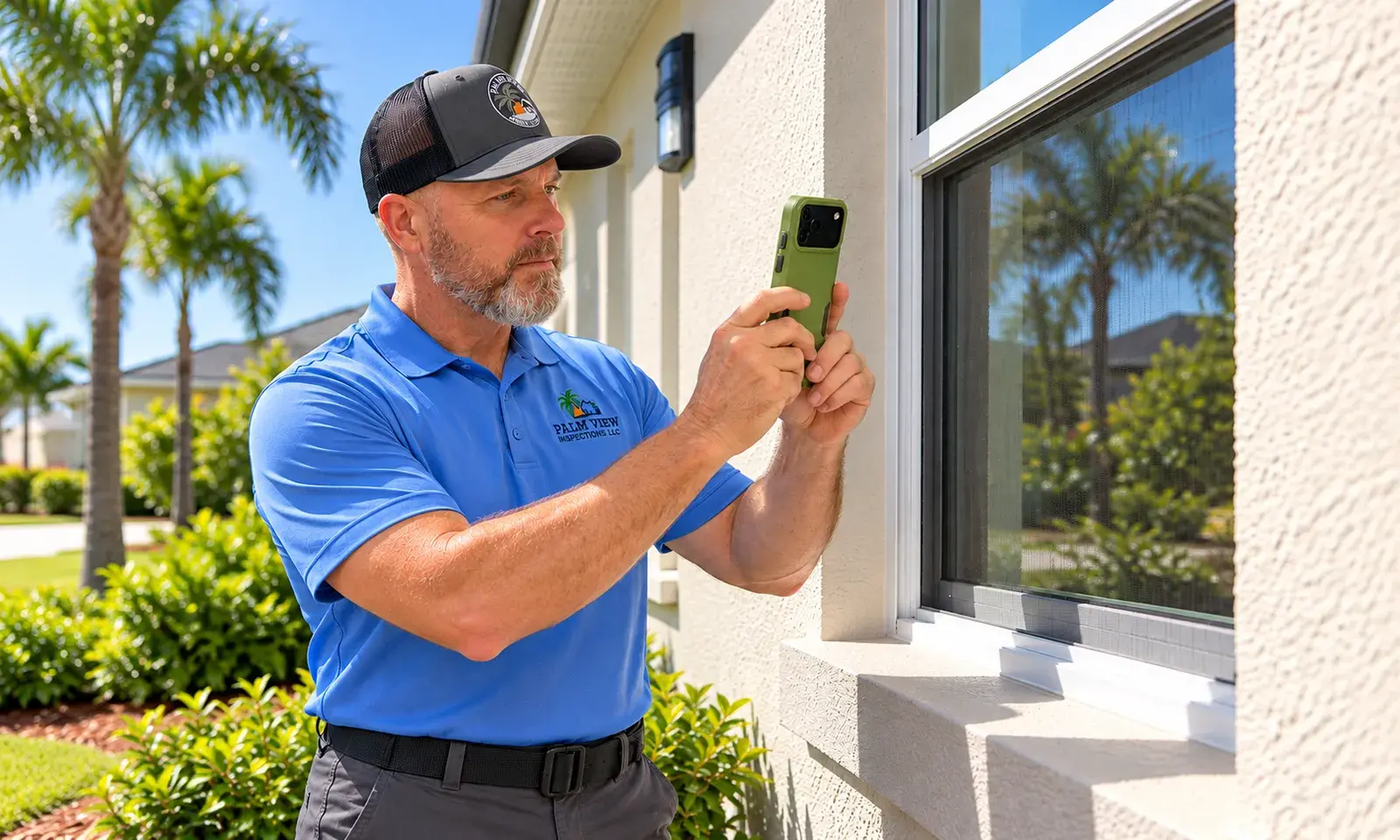
A residential home inspection is a non-invasive, visual evaluation of a home's accessible systems and components — roof, structure, exterior, electrical, plumbing, HVAC, interior, insulation, ventilation, and built-in appliances — performed by a Florida-licensed home inspector. You receive a written report with photos that identifies material defects, safety concerns, and maintenance items so you can make an informed decision before closing or plan repairs as an owner.
What a home inspection covers
Florida's Standards of Practice for home inspectors (Rule 61-30.801, Florida Administrative Code) set the minimum scope for a licensed inspection. Palm View follows those standards and documents each major system in the order you would walk the home, so the report reads logically and is easy to share with your agent, insurer, or contractor.
The inspection is visual and non-invasive: we operate normal controls, open accessible panels, walk accessible roofs when it is safe to do so, and enter accessible attics and crawlspaces. We do not open walls, move furniture or stored belongings, or disassemble equipment. Where a component is concealed or inaccessible, the report says so, so you know exactly what was and wasn't evaluated.
What Florida homes need extra attention for
Tampa Bay homes face a combination of heat, humidity, salt air near the coast, intense summer storms, and hurricane exposure. That shapes where we spend our time. We look closely at roof coverings and flashing, signs of past water intrusion, attic ventilation and moisture, HVAC condensate management, exterior stucco and wood trim, grading and drainage around slab foundations, and older electrical panels and plumbing materials that Florida insurers commonly flag.
If a finding is likely to affect insurability — for example, an older roof or a panel brand insurers won't accept — the report says so plainly, because that can matter as much as the repair cost when you're under contract.
What a home inspection is not
A home inspection is not a code-compliance inspection, an appraisal, a warranty, or a guarantee of future performance. It won't identify every minor cosmetic flaw, and it can't see through walls. It is a professional snapshot of the home's visible condition on the day of the inspection — the most useful single piece of information most buyers get before closing.
Who typically needs it
- Buyers during the inspection period of a purchase contract
- Sellers who want a pre-listing inspection to avoid surprises during negotiation
- Owners who want a baseline condition report or a pre-hurricane-season checkup
- Investors and landlords evaluating a rental or flip
- Families buying a home for aging parents from out of state
What's included
We evaluate
- Roof covering, flashing, gutters, and visible roof structure
- Exterior walls, stucco, trim, doors, windows, driveways, walkways, and grading
- Foundation and visible structural components
- Attic framing, insulation, and ventilation
- Electrical service, main panel, sub-panels, branch wiring, outlets, GFCI/AFCI protection
- Water supply and drain lines, fixtures, water heater, and visible leaks
- Heating and cooling equipment, condensate drainage, and distribution
- Interior walls, ceilings, floors, stairs, and railings
- Built-in kitchen appliances
- Garage, garage door operation, and safety reverse
- Smoke alarm presence and other visible life-safety concerns
Not included
- Concealed components inside walls, under flooring, or underground
- Code compliance, permits, or zoning
- Wood-destroying organisms (available as a separate WDO inspection)
- Mold sampling, water quality, pools, spas, and sewer lines unless added
- Cosmetic items and remaining-life predictions beyond general estimates
Benefits
- Know about material defects before your inspection period ends
- Negotiate repairs or credits with documented evidence
- Budget for near-term maintenance and replacements
- Spot likely insurance issues (roof age, panel type, plumbing) early
- Understand how to operate and maintain your new home
Pricing and cost factors
From $290 (under 1,000 sq ft)
Residential pricing is based on the home's living area, with adjustments for older homes and crawlspace foundations. See current tiers on the pricing page or use the estimator.
Homes over 5,000 sq. ft. – call for custom quote.
- Living area (square footage under air)
- Year built — older homes take longer to evaluate
- Crawlspace or raised foundations
- Travel adjustment only for requests beyond our regular service area
- Add-ons such as wind mitigation or a WDO inspection
What to expect
When to schedule: Schedule as soon as your contract is signed. Florida purchase contracts commonly allow 10–15 days for inspections, and repair negotiations need time after the report arrives.
Step 1: Schedule online or by phone
Pick a time that fits your contract's inspection period. We confirm the property details, access, and any add-ons.
Step 2: On-site inspection
Most homes take 2.5 to 4 hours depending on size, age, and condition. You're welcome to attend — the last 20–30 minutes is the best time to walk through findings together.
Step 3: Photo-documented report
You receive a digital report with photos, plain-language explanations, and clear priority levels, available the same day for eligible inspections under our Same-Day Report Guarantee.
Step 4: Questions after the report
Call with questions while you negotiate repairs or credits. We explain findings; we don't pressure you toward any decision.
Home Inspection FAQs
How long does a home inspection take?
Most single-family homes take 2.5 to 4 hours on site. Larger, older, or poorly maintained homes can take longer. See how long a home inspection takes for the details.
Should I attend the inspection?
Yes, if you can. Attending the final walkthrough lets you see key findings in person and ask questions. If you can't attend, the report is written to stand on its own and we'll review it with you by phone.
Can I add a wind mitigation inspection?
Yes. A wind mitigation inspection can be performed during the same visit at a reduced price, which is often the most efficient way to document insurance credits before closing.
Does the inspection include termites?
Not by itself. Wood-destroying organism (WDO) inspections are a separate, pest-control-licensed inspection in Florida, and you can add one to your Palm View home inspection when you book. WDO inspections provided by Termite Depot. See WDO inspections.
Can a house fail an inspection?
No — there's no pass or fail. The report documents condition so you can decide what matters. Read can a house fail a home inspection.
Related services
Wind Mitigation Inspection
Documents visible wind-resistant features of the home on Florida's official form for your insurer to evaluate for applicable wind-mitigation credits or discounts.Learn Moreabout Wind Mitigation InspectionFour-Point Inspection
Documents the age, type, condition, and visible deficiencies of the roof, electrical, plumbing, and HVAC systems for insurance underwriting review.Learn Moreabout Four-Point InspectionNew-Construction Final Inspection
Examines accessible systems and finishes near completion, documenting visible defects, incomplete work, and installation concerns for review with the builder before closing.Learn Moreabout New-Construction Final InspectionWood-Destroying Organism (WDO) Inspection
Add-on to a home inspectionExamines accessible areas for evidence of wood-destroying organisms, visible damage, and signs of previous treatment or infestation. WDO inspections provided by Termite Depot.Learn Moreabout Wood-Destroying Organism (WDO) InspectionLearn more
What Is a Home Inspection? A Florida Buyer's Guide
A home inspection is a licensed inspector's visual evaluation of a home's systems. Learn what's covered in Florida, what isn't, and how to use the report.
Read the guideWhat to Expect During a Florida Home Inspection
What a Florida home inspection covers, what happens before, during, and after it, and what it can't tell you.
Read the guideWhat Does a Home Inspector Look For?
A room-by-room and system-by-system look at what a Florida home inspector evaluates, the common findings in Tampa Bay homes, and what's outside the scope.
Read the guide
Schedule your residential home inspection
Schedule online or call to talk through the right inspection for your home and timeline.