
What to Expect During a Florida Home Inspection
What a Florida home inspection covers, what happens before, during, and after it, and what it can't tell you.


A home inspection can tell you a lot about a property, but if you have never attended one, you may not know what to expect. What does the inspector actually inspect? How long will the process take? Should you be there? What happens if something cannot be inspected? And what will you receive when the inspection is finished?
A Florida home inspection is a systematic examination of the home's accessible systems and components. The inspector observes and tests what is within the inspection scope, documents significant findings, and provides a written report to help you better understand the condition of the property.
Here is what you can expect before, during, and after the inspection.
Before the Inspection
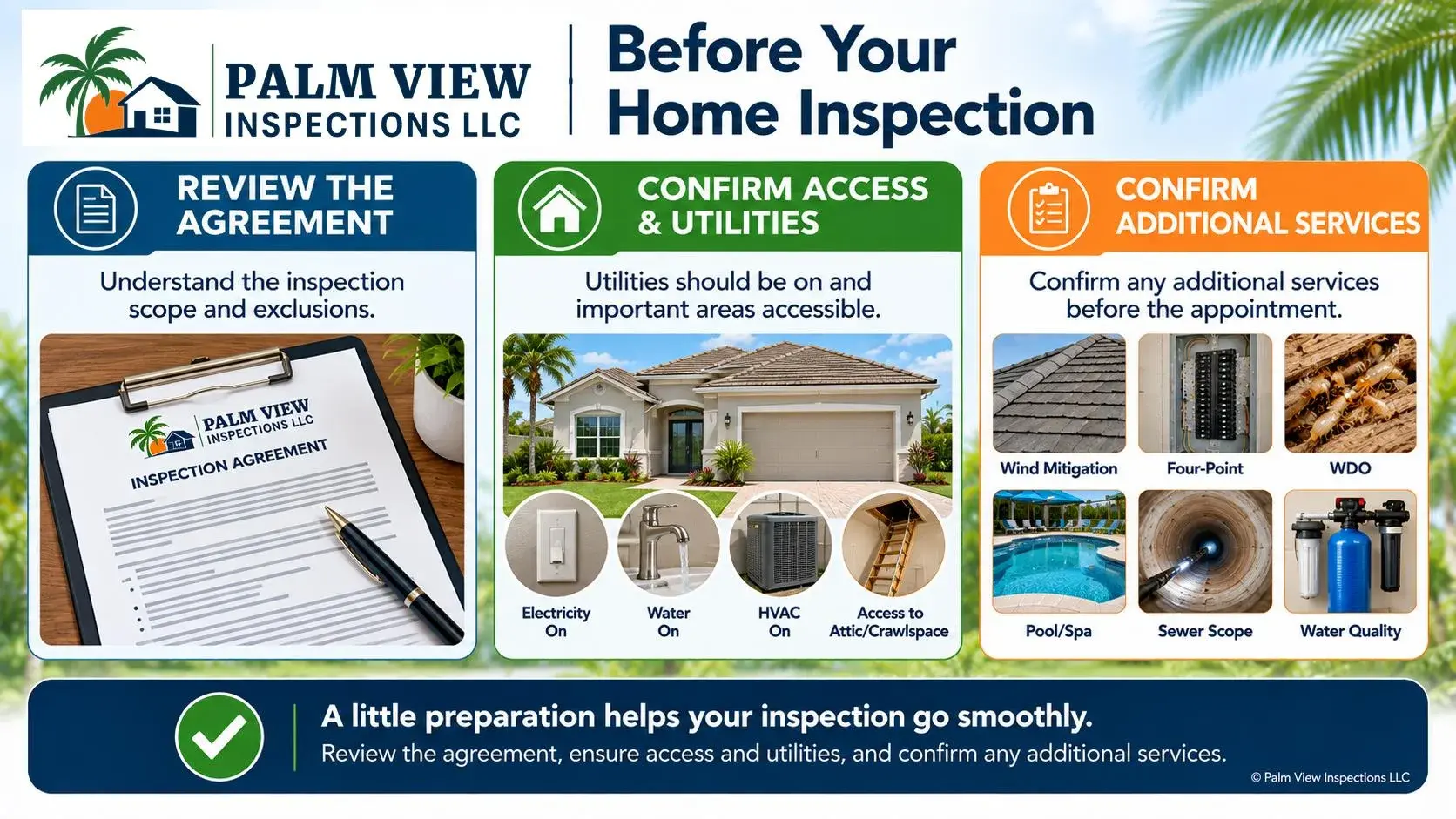
Before the inspection begins, you should know what the inspection includes—and what it does not.
Florida requires a home inspector to provide you with a copy of the inspector's license and a written disclosure of the inspection's scope and exclusions before contracting for or beginning the inspection. Your inspection agreement provides additional details about the service you selected, so take a few minutes to review it and ask questions about anything you do not understand.
The property also needs to be reasonably accessible. Utilities should be on, and the inspector needs access to areas and equipment within the inspection scope, such as electrical panels, HVAC equipment, the water heater, attic or crawlspace entrances, and other installed systems and components. Locked doors, stored belongings, disconnected utilities, unsafe conditions, or other access restrictions can prevent some areas or components from being inspected.
You do not need to prepare the house for the inspector if you are the buyer and do not control the property. However, your real estate agent can help communicate access needs to the seller or listing agent before the appointment. If you own or occupy the home, making important systems and access points readily available can help the inspector complete a more thorough inspection.
If you have requested additional services—such as a wind mitigation, four-point, WDO, pool and spa, sewer scope, or water-quality service—those should also be confirmed before the appointment. These are separate services and are not automatically included in a standard residential home inspection.
What Is a Home Inspection?
Florida defines a home inspection as a limited visual examination of a home's readily accessible, installed systems and components for the purpose of providing a written professional opinion about the home's condition.
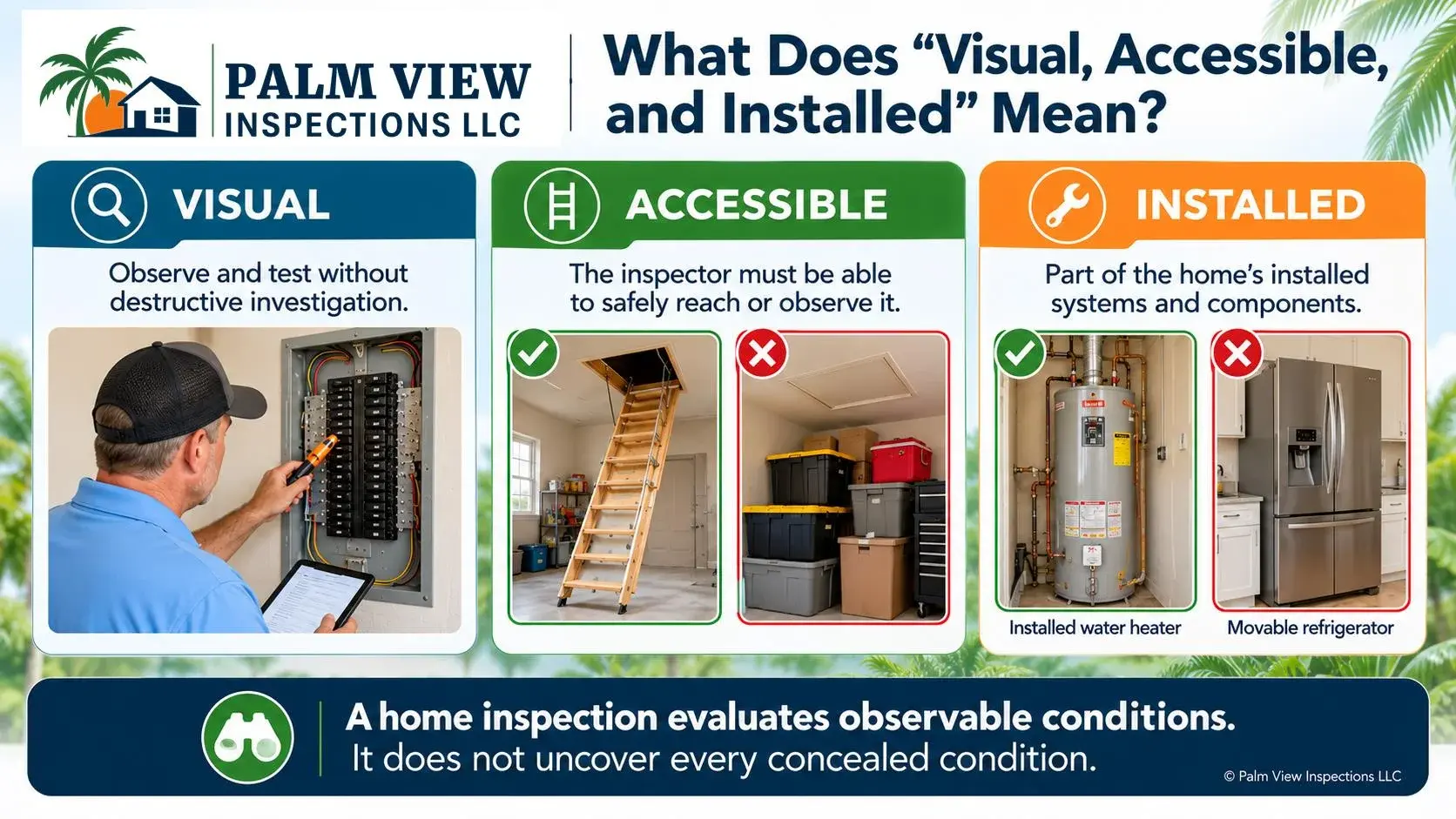
Three words in that definition are especially important: visual, accessible, and installed.
Visual does not mean "look but don't touch." When safe and appropriate, the inspector operates systems and components using normal controls, opens readily accessible panels, tests components within the inspection scope, and uses inspection tools when they can provide useful information about observable conditions.
Accessible means the inspector must be able to safely reach or observe the area or component. An inspector is not required to move furniture, appliances, stored belongings, insulation, or other materials to gain access. An area may also be excluded when entering or inspecting it could create a risk of injury or property damage.
Installed means the inspection focuses on systems and components that are part of the home. For example, a water heater is installed as part of the home's plumbing system. A refrigerator, by comparison, is generally a movable appliance rather than an installed component. This distinction helps define what is automatically within the scope of a standard home inspection and what may be inspected only when specifically included in the inspection scope.
A home inspection is also non-destructive. The inspector does not cut into walls, remove flooring, dismantle equipment, excavate underground components, or damage finished surfaces to determine what may be concealed behind them.
Finally, the inspection represents the condition of the home at the time of the inspection. It cannot predict every future failure or reveal every concealed, intermittent, or developing problem. A component that operates normally during the inspection can still fail later, just as a problem hidden behind a finished wall may exist without producing visible evidence.
The goal is not to eliminate every unknown. It is to identify and document the significant observable conditions that can reasonably be evaluated during the inspection.
What Does the Inspector Look At?
A Florida home inspection covers the major systems and components of the home. The inspector evaluates them when they are present, accessible, and within the inspection scope.
The inspection is broader than simply checking whether things "work." The inspector observes the condition of visible components, operates applicable systems using normal controls when safe and appropriate, and looks for significant deficiencies or other conditions that should be documented in the inspection report.
Here are the major areas you can expect your inspector to evaluate.
Exterior and Site
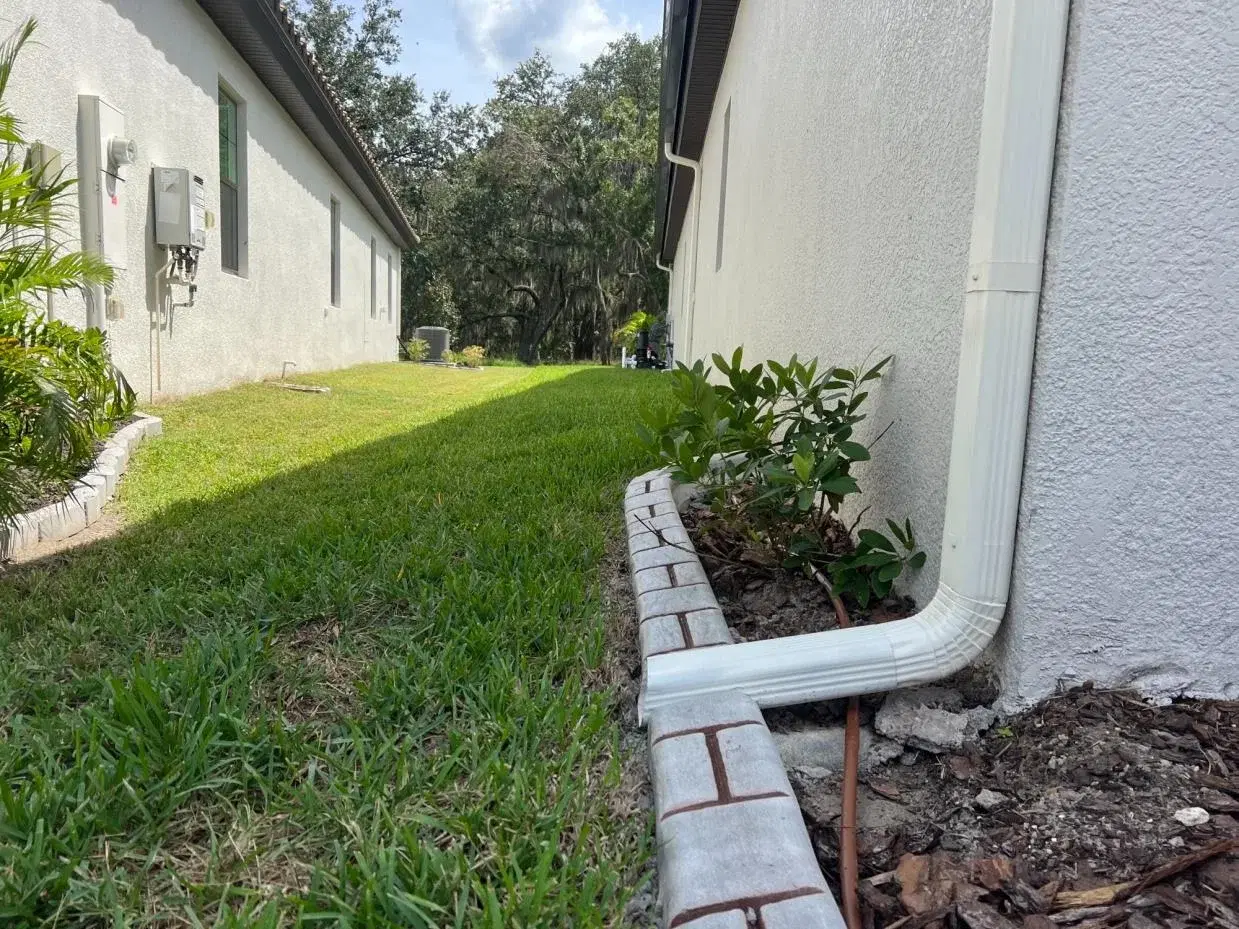
The exterior and surrounding site can provide important information about the condition of the home. The inspector evaluates visible and accessible components such as exterior wall coverings, doors, trim, flashing, eaves, soffits, fascia, attached porches or decks, walkways, driveways, grading, drainage, and vegetation that may affect the structure.
Site conditions are especially important when they can direct water toward the home or otherwise affect the structure. For example, the way the property drains can be more significant to the inspection than whether the landscaping looks attractive.
Roof and Attic
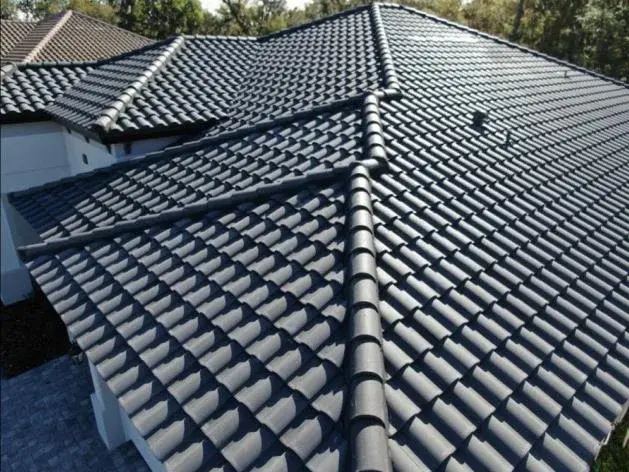
The inspector evaluates visible and accessible roof components, including roof-covering materials, flashing, penetrations, drainage systems, and other components within the inspection scope. The method used to inspect the roof depends on the property and conditions at the time of the inspection.
Walking on the roof is not always safe or appropriate. Roof slope, height, weather, surface conditions, roofing materials, accessibility, or the possibility of damaging the roof can affect how it is inspected. When walking the roof is not appropriate, the inspector may use another method to observe accessible portions of it.
When accessible and safe to enter, the attic provides another important view of the home. The inspector evaluates visible components within the inspection scope, which may include roof framing, insulation, ventilation, electrical components, HVAC equipment or ductwork, and signs of moisture intrusion or other observable conditions.
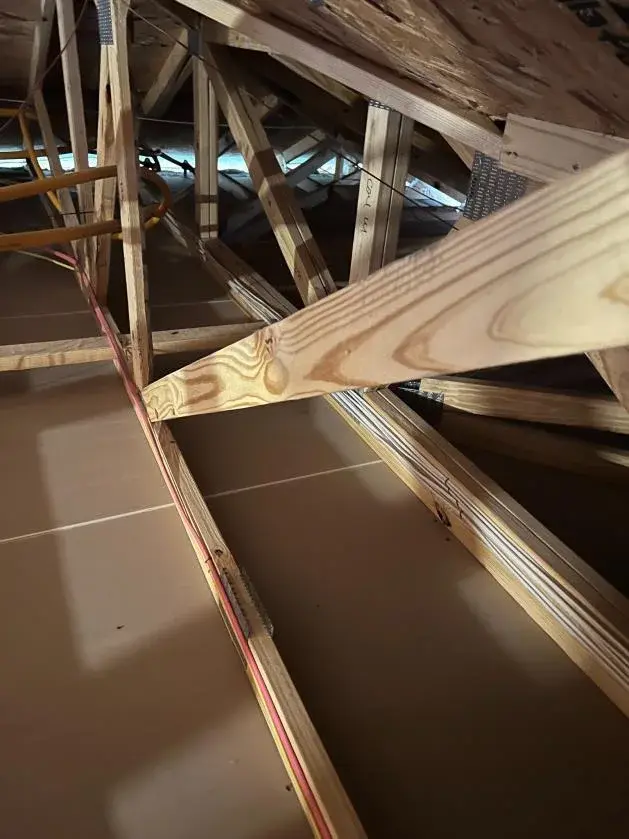
Structure
The inspector evaluates visible and accessible structural components, which may include the foundation and framing components such as beams, columns, floor framing, wall framing, joists, rafters, and trusses.
The inspector looks for observable conditions that may indicate deterioration, damage, movement, or another structural concern. Cracks, displacement, damaged framing, moisture-related deterioration, or other visible conditions may warrant further evaluation depending on their location and significance.
A home inspection is not a structural engineering analysis. When an observed condition requires expertise beyond the scope of the inspection, the inspector may recommend further evaluation by an appropriately qualified professional.
Electrical System
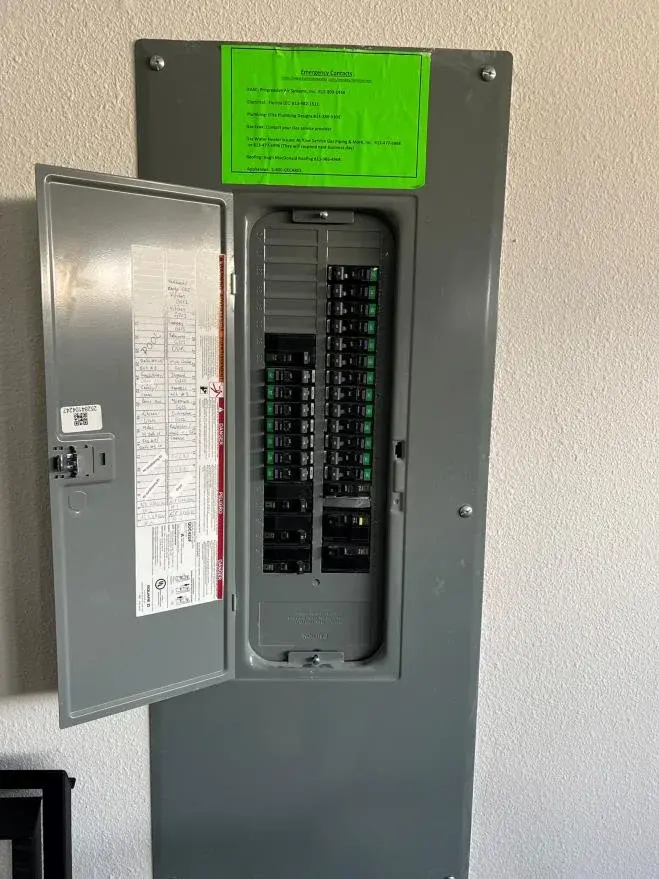
The inspector evaluates visible and accessible portions of the home's electrical system, including the electrical service, panels, conductors, overcurrent protection, grounding, installed fixtures, switches, receptacles, and applicable safety devices within the inspection scope.
When safe and accessible, electrical panels are opened for inspection. This allows the inspector to observe conditions that cannot be identified simply by operating a light switch or testing a receptacle. The inspector also operates representative switches, fixtures, and receptacles and evaluates applicable safety features within the inspection scope.
The inspection does not require dismantling electrical equipment or accessing concealed wiring. When an observed electrical condition requires additional expertise or work beyond the inspection scope, the inspector may recommend evaluation or correction by a qualified electrical contractor.
Plumbing and Water Heating
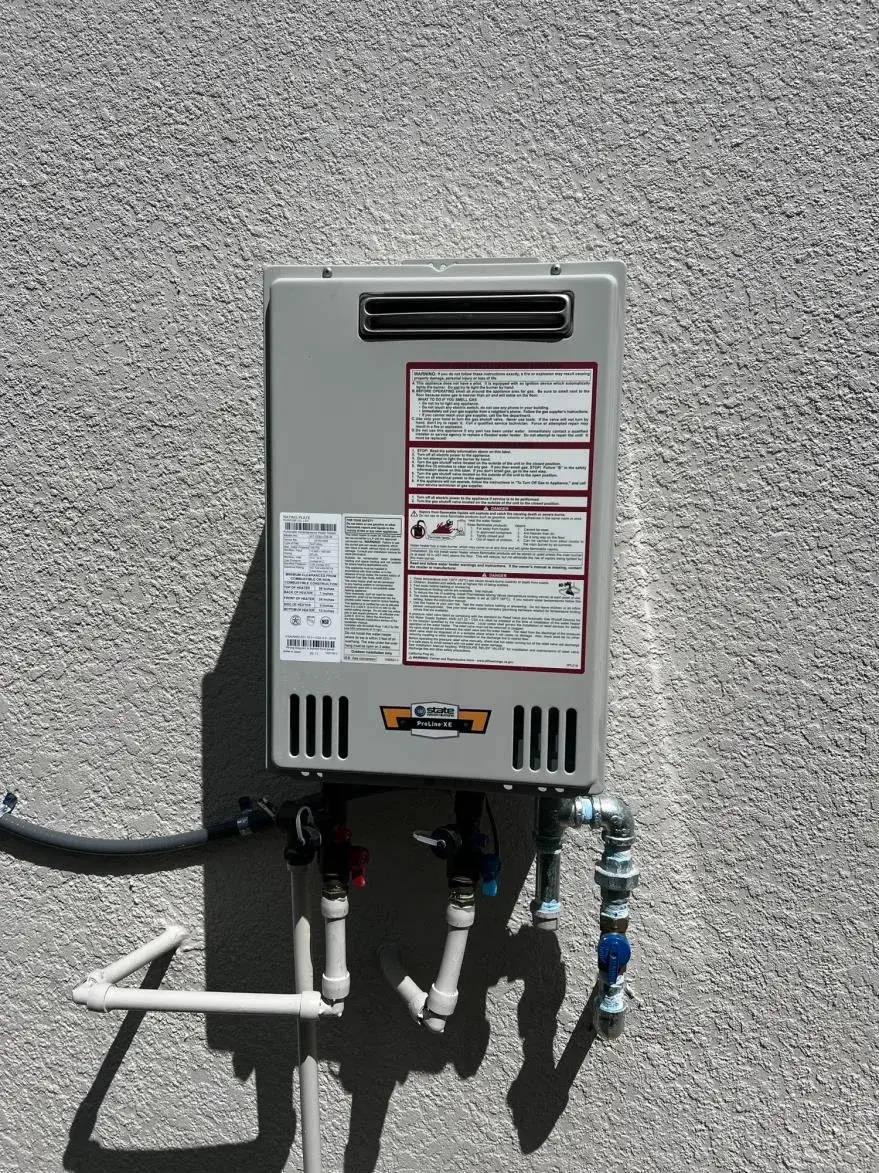
The inspector evaluates visible and accessible portions of the plumbing system, including water-supply and drain, waste, and vent components; plumbing fixtures and faucets; and water-heating equipment within the inspection scope.
Fixtures are operated using normal controls when safe and appropriate. Running water allows the inspector to observe conditions such as functional flow and drainage, visible leakage, and the operation of accessible fixtures. Because some conditions may become apparent only after water has been running, plumbing components may be checked more than once during the inspection.
The inspector also evaluates visible and accessible components of the water heater, including its installation and applicable safety components. Conditions requiring additional expertise or repair may result in a recommendation for evaluation or correction by an appropriately qualified plumbing contractor.
Heating and Cooling
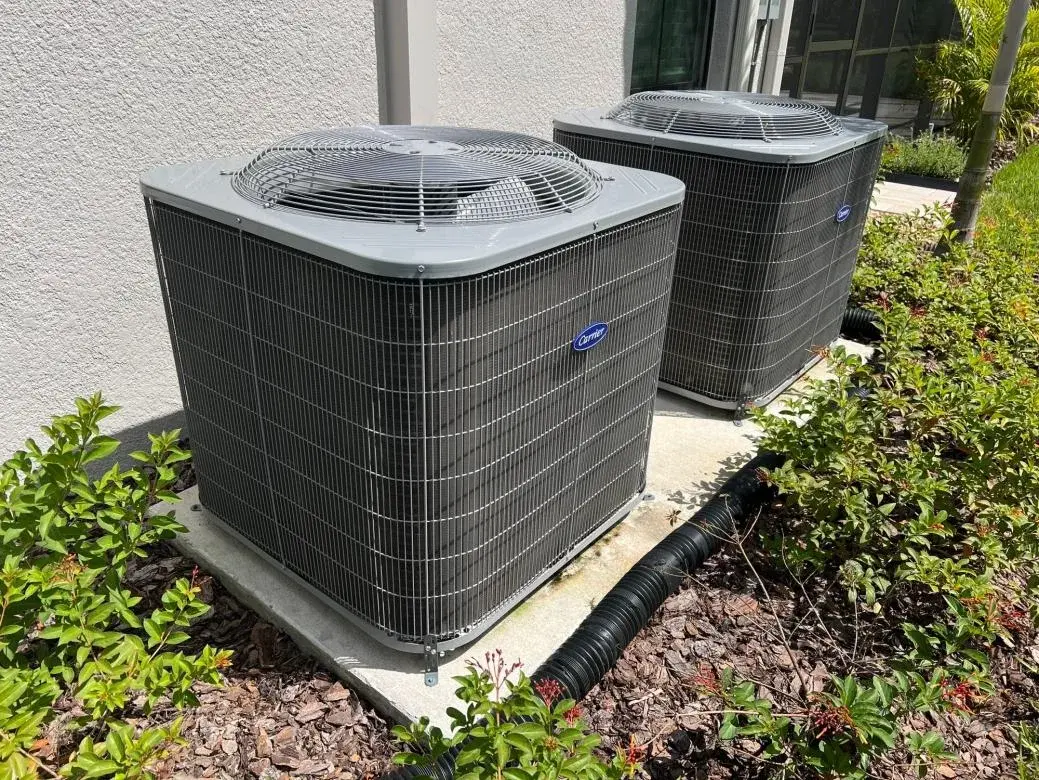
The inspector evaluates visible and accessible components of the home's heating and cooling systems, including installed heating and cooling equipment, accessible ductwork and air distribution components, condensate management, and applicable vents or flues within the inspection scope.
Systems are operated using normal controls when conditions allow them to be operated safely without risking damage to the equipment. The inspector observes system operation and visible conditions but does not dismantle equipment or perform the type of diagnostic testing associated with an HVAC service call.
In Florida, condensate management is particularly important because air-conditioning systems remove moisture from indoor air as they operate. The inspector evaluates visible and accessible condensate components for conditions such as leakage, deterioration, improper drainage, or other observable deficiencies.
When observed conditions require diagnosis, servicing, or repair beyond the scope of the home inspection, the inspector may recommend further evaluation or correction by a qualified HVAC contractor.
Interior and Installed Components
Inside the home, the inspector evaluates visible and accessible components such as walls, ceilings, floors, stairs and railings, doors and windows, installed cabinets and countertops, and garage doors and their operating systems. Installed household appliances included within the inspection scope are operated using normal controls when safe and appropriate.
The inspection focuses on conditions that affect the function or condition of the home rather than creating a list of ordinary cosmetic imperfections. A scuff, small nail hole, or minor paint blemish generally has little significance to a home inspection. A water stain, crack, damaged surface, or other visible condition may be important when it provides evidence of moisture intrusion, movement, deterioration, or another underlying concern.
Appliance inspection is also limited in scope. Operating an appliance can identify observable deficiencies, but it does not verify every setting, cycle, feature, calibration, or future performance. Movable appliances, such as a refrigerator, are not automatically included simply because they are present in the home.
When an interior condition suggests a problem that cannot be fully evaluated through a visual home inspection, the inspector may recommend further evaluation by an appropriately qualified professional.
What Happens During the Inspection?
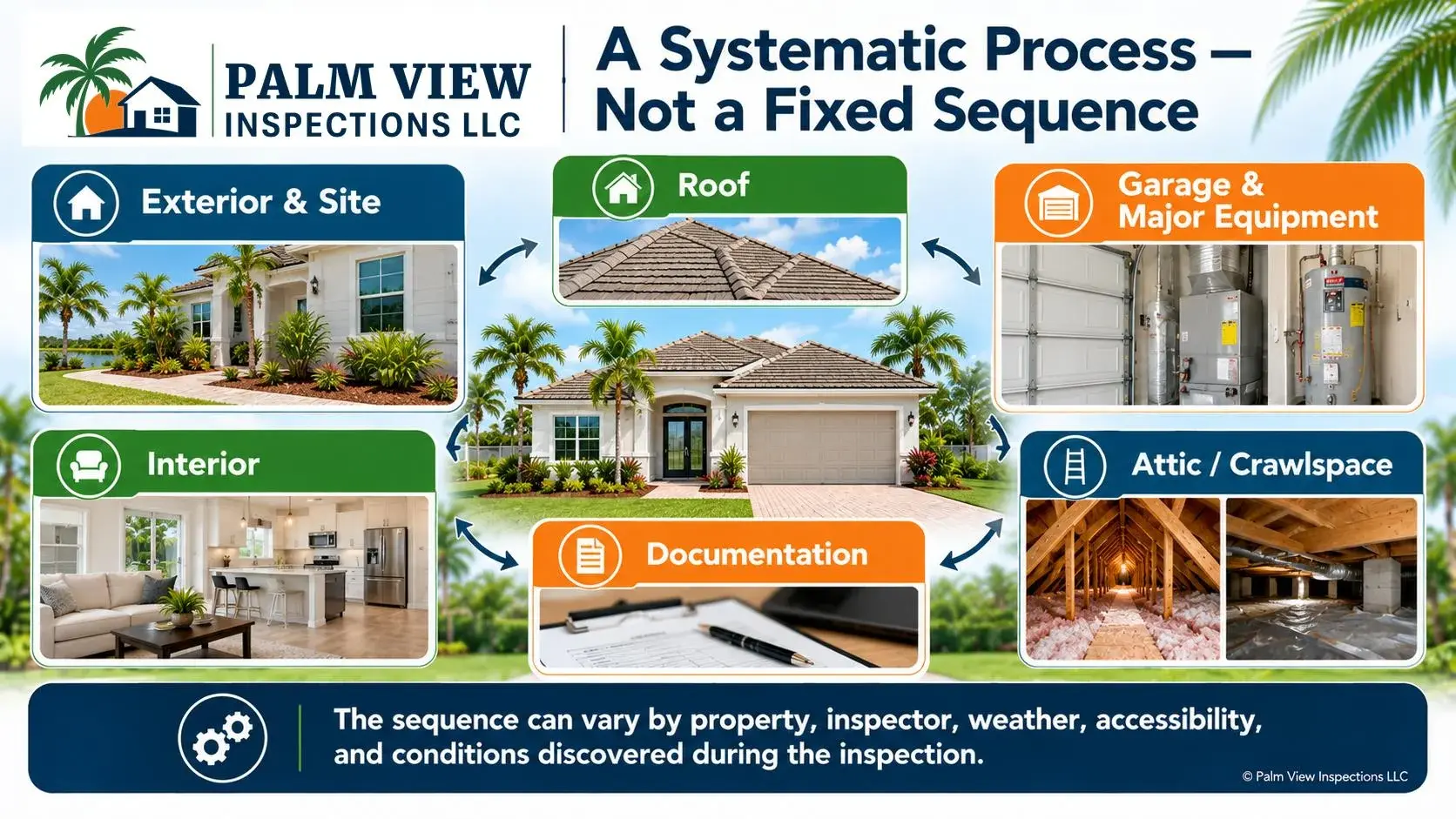
A professional home inspection follows a systematic process, but the sequence may vary from one property to another and from inspector to inspector. The home's size, design, accessibility, weather conditions, additional inspection services, and conditions discovered along the way can all affect how the inspector moves through the property.
An inspector may begin outside, evaluate the roof, move through the garage and major equipment, inspect the interior room by room, and finish with areas such as the attic or crawlspace. Another property may require a different sequence. The important point is not the order in which each component is inspected, but that the inspector follows a consistent process for evaluating and documenting the systems and components within the inspection scope.
Some inspection activities also take time. An inspector may start an installed appliance, operate plumbing fixtures, or activate another system and then continue inspecting nearby components while observing its operation. The inspector may return later to check for leakage, drainage problems, or other conditions that were not immediately apparent.
Throughout the inspection, the inspector documents observed conditions with notes and photographs and may use inspection tools when they provide useful information about visible or accessible conditions. When something warrants additional attention, the inspector may spend more time evaluating and documenting it before continuing.
This is why there is no single correct length for a home inspection. The time required depends on the size, age, design, condition, and accessibility of the property; the number and complexity of its systems; conditions discovered during the inspection; and any additional services being performed. A larger or more complex property—or one with numerous conditions requiring evaluation and documentation—will generally take longer than a smaller home with fewer observed concerns.
What Can't a Home Inspection Tell You?
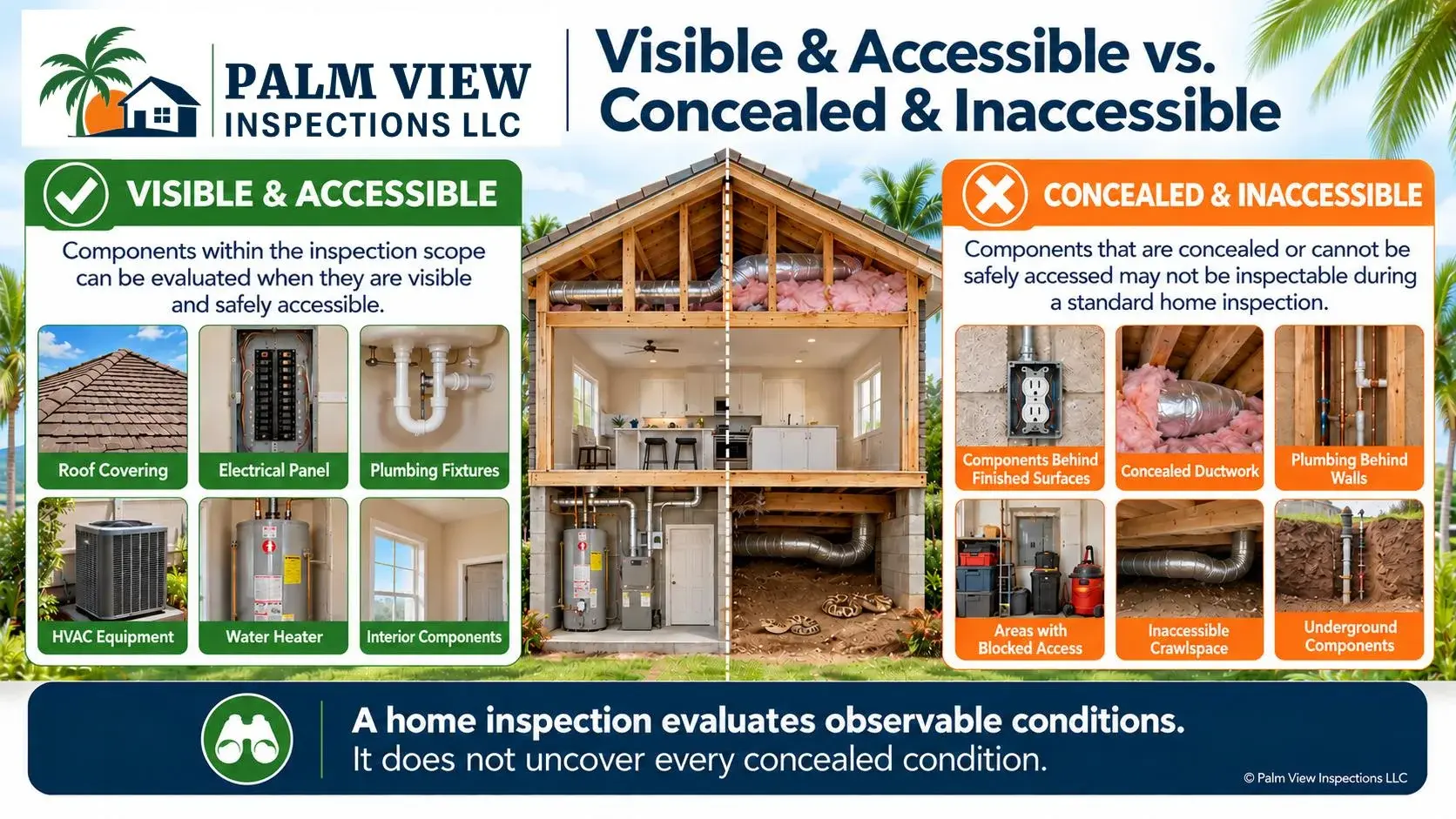
Even a thorough home inspection has limitations. Some conditions are concealed, inaccessible, intermittent, or simply outside the scope of a standard home inspection.
An inspector cannot see through walls, underneath finished flooring, or behind materials and belongings that obstruct access. Areas may also be excluded when entering or inspecting them could create a risk of injury or property damage. The inspector does not perform destructive testing or move furniture, appliances, stored belongings, insulation, or other materials simply to gain access.
A home inspection evaluates conditions that are present and observable at the time of the inspection. The inspector does not speculate about the cause of a condition when that cause cannot be determined within the scope of the inspection, nor does the inspector predict the specific date or amount of time before a system or component will fail. This is different from providing a standard life expectancy for a system or component. Standard life expectancy is a general reference based on the typical service life of that type of system or component; it is not a prediction of how long the particular system or component in the home will continue to operate.
When a system or component is present but cannot be inspected, the inspection report should identify it and explain why it was not inspected.
A standard home inspection also is not automatically a:
- Building-code compliance inspection
- Structural engineering evaluation
- Property appraisal
- Warranty or guarantee
- Prediction of future performance
- Repair estimate or contractor bid
- Environmental or laboratory test
- Pest or WDO inspection
- Insurance underwriting decision
Some of these needs can be addressed through additional inspection services or evaluation by an appropriately qualified professional.
The limitations of a home inspection do not make the inspection less valuable. They establish the boundaries of what the inspector can reasonably determine from the visible and accessible conditions at the property. Understanding those boundaries helps you use the inspection report appropriately and recognize when additional information or specialized expertise may be needed.
Should You Attend Your Home Inspection?
You do not have to attend the entire inspection to benefit from it, but being present for at least part of the inspection can be valuable.
Palm View clients are welcome to attend as much or as little of the inspection as they prefer. Some clients stay for the entire inspection, while others use the time to look around the home, take measurements, or return near the end.
If you attend, the inspector needs enough space to work safely, operate equipment, take photographs, and concentrate on the inspection process. You are encouraged to ask questions, but allowing the inspector to complete each part of the inspection without interruption helps maintain a systematic process and reduces the chance that something will be overlooked.
One of the most useful times to participate is near the end of the inspection. Palm View includes a final walkthrough before completing the inspection so you can review significant observations with the inspector, see important conditions in context when practical, and ask questions about what was found.
The walkthrough is not a substitute for reading the completed inspection report. Instead, it gives you an opportunity to better understand important observations before reviewing the photographs, descriptions, and recommendations in the report.
What Happens After the Inspection?
Florida requires a home inspector to provide the client with a written inspection report. The report documents the results of the inspection and becomes the primary record of the conditions observed at the property.
The report identifies inspected systems and components that, in the inspector's professional opinion, are significantly deficient or near the end of their service lives. When the reason for a reported deficiency is not self-evident, the report explains the basis for that opinion. The report also identifies systems or components that were present but not inspected and explains why they were not inspected.
A useful inspection report is more than a collection of photographs or a checklist of defects. It should help you understand what was observed, why the finding matters, and what next step is appropriate. Depending on the finding, that next step might be monitoring or maintenance, correction, or further evaluation by an appropriately qualified professional.
Palm View provides a detailed electronic report with photographs, findings, and recommended next steps. Following the inspection, you also have an opportunity to discuss the report and ask questions about findings you may not fully understand.
The report should be read as a whole. The final walkthrough can help you understand significant observations while you are still at the property, but the completed report contains the full results of the inspection and should be reviewed carefully before making decisions based on the inspection.
Reading the Report in Context
It can be tempting to judge a home inspection by the number of findings in the report. That number by itself tells you very little.
Homes can have routine maintenance items, aging components, minor deficiencies, and more significant concerns. A longer report does not necessarily mean you are buying a bad house, just as a shorter report does not guarantee a trouble-free one. The significance of the findings matters more than the number of findings.
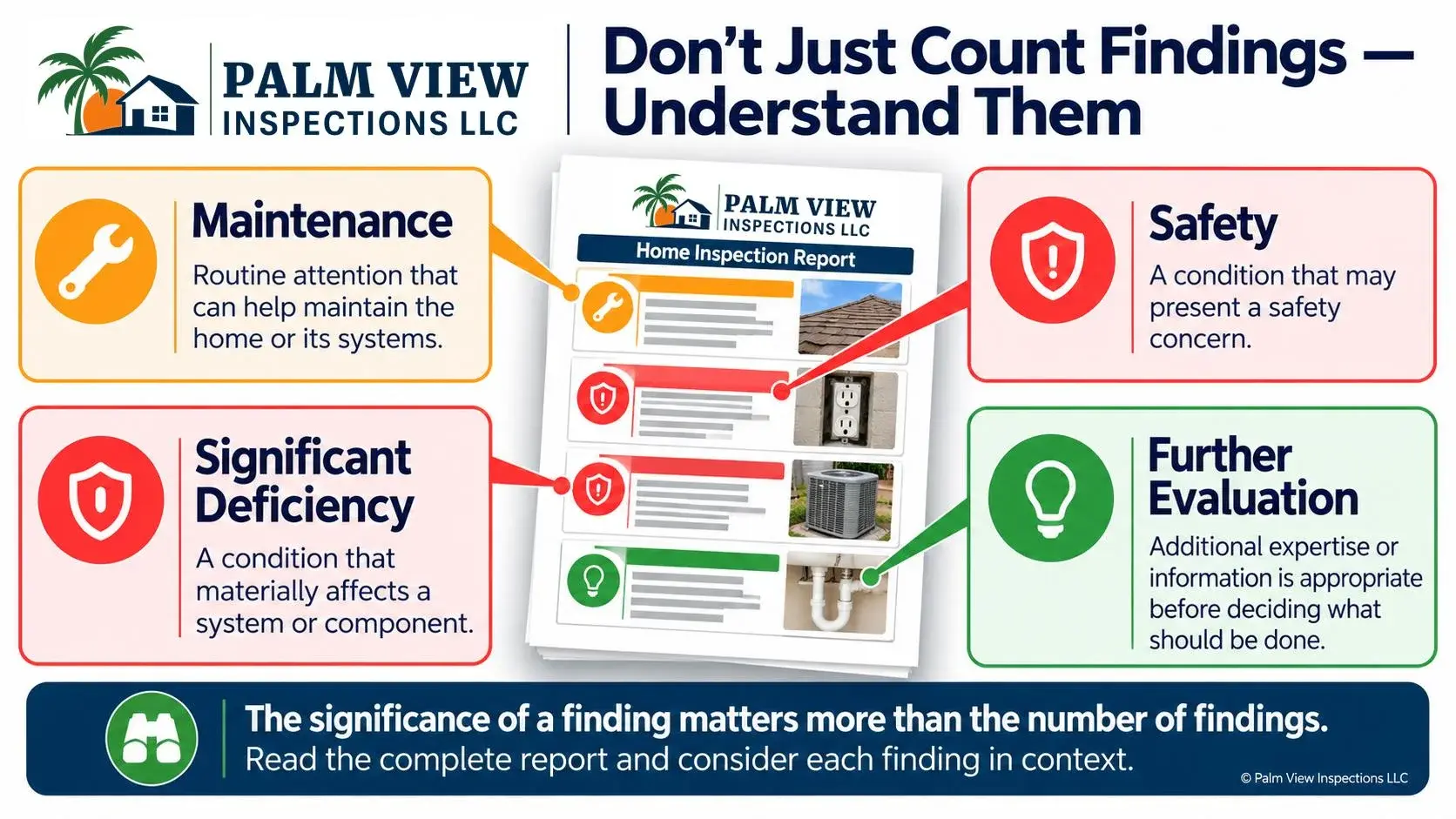
As you review the report, focus on understanding each finding and its significance. Pay particular attention to safety concerns, significant deficiencies, systems or components approaching the end of their standard life expectancy, and conditions for which the inspector recommends additional evaluation or correction.
When a finding requires expertise beyond the scope of the home inspection, the report may recommend evaluation by an appropriately qualified professional. That recommendation does not necessarily mean the condition is severe or that an expensive repair is required. It means additional expertise or information is appropriate before determining what, if anything, should be done.
The inspection gives you information about the observable condition of the property at the time of the inspection. How you use that information depends on your circumstances, priorities, and the decisions you need to make.
The Bottom Line
A Florida home inspection gives you a professional assessment of the visible and accessible condition of a home at the time of the inspection. It cannot reveal every concealed condition, predict when a component will fail, or eliminate the uncertainties that come with owning a home.
What it can do is give you a clearer understanding of the property: what was inspected, what conditions were observed, which findings deserve attention, what could not be evaluated, and when additional expertise may be appropriate.
The goal is not a perfect house or a report with no findings. It is useful information that helps you understand the home and make informed decisions about what comes next.
Sources
- Florida Statutes, Chapter 468, Part XV, including §§ 468.8311, 468.8321, and 468.8323.
- Florida Administrative Code, Chapter 61-30, Standards of Practice for Home Inspectors.
- InterNACHI, Home Inspection Standards of Practice, last revised October 2022.