
Insurance and Property Documentation
Wind Mitigation Inspection
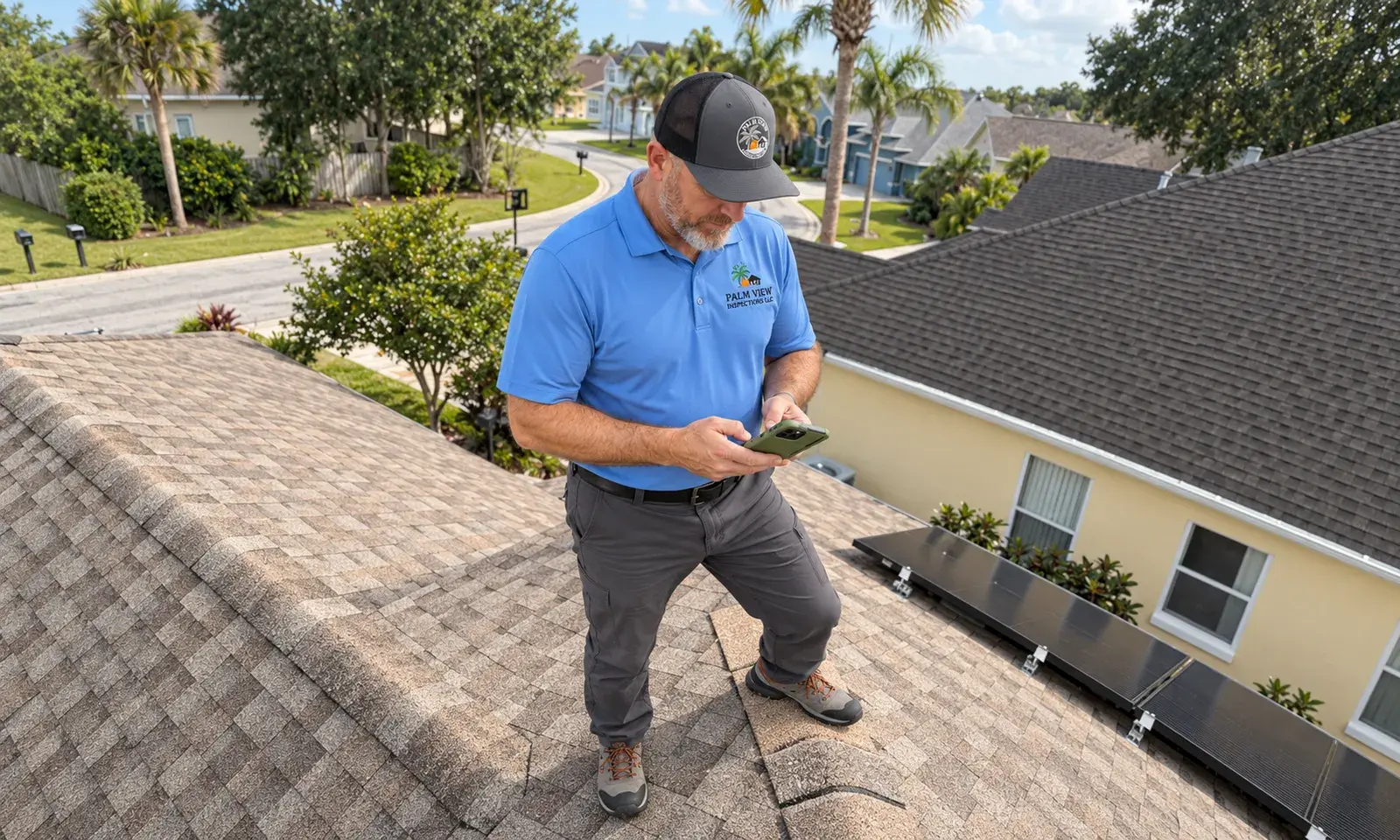
Quick answer
What is a wind mitigation inspection?
A wind mitigation inspection documents the construction features that help a Florida home resist hurricane wind damage — roof covering, roof-deck attachment, roof-to-wall connections, roof shape, secondary water resistance, and opening protection — on the state's Uniform Mitigation Verification Inspection Form (OIR-B1-1802). Florida law requires insurers to offer premium discounts for qualifying features, and the completed form is how you document them. A report is generally valid for up to five years if nothing material changes.
The seven items on the form
- Building code — whether the home was built under the Florida Building Code (permits applied for on or after March 1, 2002 in most of the state)
- Roof covering — the product type and whether it meets code-approved standards, based on permit date or product approval
- Roof-deck attachment — the nail or staple size and spacing that holds the sheathing to the trusses
- Roof-to-wall attachment — toe nails, clips, single wraps, double wraps, or structural connections
- Roof geometry — hip roofs generally perform best and earn the largest credit
- Secondary water resistance — a sealed roof deck that limits water intrusion if the covering is lost
- Opening protection — impact-rated windows, doors, garage doors, and shutters on glazed openings
Why it can matter so much
Under section 627.0629, Florida Statutes, insurers must offer discounts or credits for wind-resistant construction features. For many homes the windstorm portion is the largest part of the premium, so documenting the right features can make a meaningful difference. The exact savings depend on your insurer's rating plan — we document the features; your insurer applies the discounts.
Accuracy matters. The inspector must verify each feature with photographic evidence — for example, by locating clips or straps in the attic or confirming a roof permit date. If a feature can't be verified, it can't be credited, even if it exists.
Homes that usually benefit most
Homes built after 2002, homes with a recently permitted roof, hip-roofed homes, and homes with impact windows or rated shutters tend to see the largest credits. Older homes can still benefit — a verified clip or strap connection or a secondary water barrier installed during a re-roof can make a difference.
Who typically needs it
- Buyers who want accurate insurance quotes before closing
- Owners who have never submitted a wind mitigation form
- Owners who replaced a roof, installed impact windows, or added shutters
- Owners whose previous form is more than five years old
What's included
We evaluate
- Attic inspection of roof-deck attachment and roof-to-wall connections
- Roof covering and permit/product-approval review
- Roof geometry measurement
- Secondary water resistance verification where visible
- Opening protection documentation for all glazed openings
- Photographs required by the form
- Completed and signed OIR-B1-1802 delivered digitally
Not included
- Determining the specific premium discount (set by your insurer)
- Features that can't be visually verified or documented
- Structural engineering evaluation
Benefits
- Document every wind-resistant feature you qualify for
- Potential premium savings for up to five years per form
- Accurate insurance quotes before closing on a purchase
- Know which upgrades could qualify for more credits later
Pricing and cost factors
$115 stand-alone · +$40 as an add-on to a home inspection
Wind mitigation has a standalone price and a reduced price when added to a home inspection.
- Standalone or added to a home inspection
- Location (travel adjustment beyond our service area)
What to expect
When to schedule: Buyers: during the inspection period, so quotes reflect real credits. Owners: any time, and again after a re-roof or window upgrade.
Step 1: Gather what you have
Roof permit dates, window or shutter product approvals, and prior wind mitigation forms all help verify features.
Step 2: Attic and exterior verification
We document each feature with photos. Standalone inspections typically take about an hour.
Step 3: Submit the signed form
Send the completed form to your agent, who submits it to your insurer to apply credits.
Wind Mitigation FAQs
How long is a wind mitigation report good for?
The OIR-B1-1802 form is generally valid for up to five years, provided no material changes are made to the home — such as a new roof or new windows.
How much can a wind mitigation inspection save?
It depends on the home and your insurer's rating plan. Many Florida owners see meaningful savings, especially on newer homes with hip roofs, strong roof-to-wall connections, and opening protection. Your agent can run the numbers once the form is submitted.
Do I need to be home for a wind mitigation inspection?
Someone needs to provide access to the attic and the home's interior. Owners often attend; a buyer's agent can also provide access during a home inspection.
Related services
Four-Point Inspection
Documents the age, type, condition, and visible deficiencies of the roof, electrical, plumbing, and HVAC systems for insurance underwriting review.Learn Moreabout Four-Point InspectionResidential Home Inspection
A visual assessment of accessible home systems and components, documenting visible deficiencies with photographs and recommendations to support purchase, repair, and maintenance decisions.Learn Moreabout Residential Home InspectionNew-Construction Final Inspection
Examines accessible systems and finishes near completion, documenting visible defects, incomplete work, and installation concerns for review with the builder before closing.Learn Moreabout New-Construction Final InspectionLearn more
What Is a Wind Mitigation Inspection in Florida?
A wind mitigation inspection documents hurricane-resistant features on Florida's OIR-B1-1802 form so insurers can apply premium discounts. Here's how it works.
Read the guideFour-Point vs. Wind Mitigation Inspections: What's the Difference?
Both are Florida insurance inspections, but they answer different questions. Compare the four-point and wind mitigation side by side — and learn when you need both.
Read the guideFlorida Home Inspection Checklist: What Matters Most
A Florida-specific buyer's checklist: roof, water intrusion, HVAC, electrical and plumbing materials, wind protection, flood zones, and more.
Read the guide
Schedule your wind mitigation inspection
Schedule online or call to talk through the right inspection for your home and timeline.