
Insurance and Property Documentation
Four-Point Inspection
Quick answer
What is a four-point inspection?
A four-point inspection is an insurance inspection that documents the age, type, and condition of a home's four major systems — roof, electrical, plumbing, and HVAC — on a form the insurance company uses for underwriting. Florida insurers commonly require one for older homes before writing or renewing a homeowners policy. It is not a full home inspection; it focuses only on the details an underwriter needs.
The four systems
- Roof — covering type, approximate age, remaining useful life, and visible damage or leaks
- Electrical — panel brand and type, service amperage, wiring type, and hazards such as double taps or scorching
- Plumbing — supply and drain materials, water heater age and location, and active or past leaks
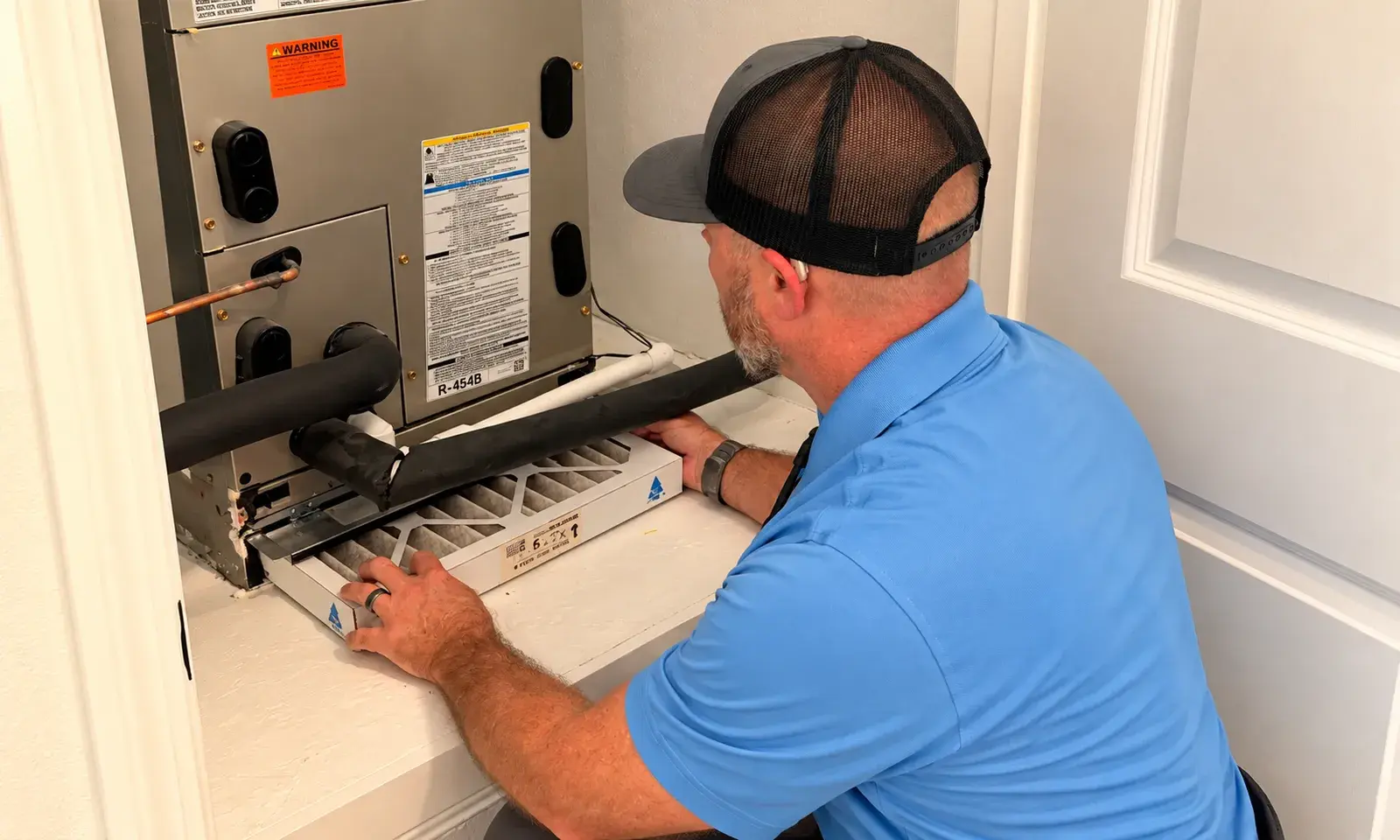
- HVAC — system type, approximate age, and whether it is in good working order
Why insurers ask for it
Older homes carry more risk from aging roofs, outdated wiring, and failure-prone plumbing. Many Florida insurers require a four-point for homes roughly 25 to 40 years old or older — the threshold varies by carrier and policy type. Your agent can tell you exactly what your carrier needs.
Some materials are a problem for many carriers: Federal Pacific Stab-Lok and Zinsco panels, fuse panels, knob-and-tube or ungrounded cloth wiring, aluminum branch wiring without approved remediation, polybutylene supply piping, and galvanized steel supply lines. A roof near the end of its life can also limit options. The inspector documents conditions accurately — we can't change what's there, but we can tell you early so you can get repair quotes during your inspection period.
Four-point vs. full home inspection
A four-point inspection is narrow by design. It does not evaluate the structure, most of the interior, appliances, windows, or the dozens of other items in a full home inspection. If you're buying, you almost always want both — and adding the four-point to a home inspection visit costs less than scheduling it separately.
Who typically needs it
- Buyers of an older home whose insurer requires a four-point to bind coverage
- Owners renewing or switching a policy on an older home
- Owners who replaced a roof, panel, water heater, or HVAC system and need updated documentation
What's included
We evaluate
- Roof covering, age, condition, and visible leaks
- Electrical panel(s), service size, wiring type, and hazards
- Plumbing supply/drain materials, water heater, and leaks
- HVAC type, age, and operation
- Required photographs of each system
- Signed insurance form delivered digitally
Not included
- Structure, interior, appliances, and other home-inspection items
- Guarantee that an insurer will write or renew a policy
- Repair estimates or contractor services
Benefits
- Meet your insurer's underwriting requirement quickly
- Learn early whether any system could affect insurability
- Bundle with a wind mitigation to document discounts in the same visit
Pricing and cost factors
$135 stand-alone · +$45 as an add-on to a home inspection
Four-point inspections have a standalone price and a reduced price when added to a home inspection.
- Standalone vs. bundled with a home inspection
- Bundled with wind mitigation
- Location (travel adjustment beyond our service area)
What to expect
When to schedule: Buyers should schedule during the inspection period so insurance can be bound before closing. Many insurers want a four-point completed within the past 12 months — confirm with your agent.
Step 1: Confirm your insurer's form
Most carriers accept a standard four-point form; some have their own. Tell us who your insurer is when you book.
Step 2: Document the four systems
On site we photograph and record each system. Standalone four-points are typically completed in under an hour.
Step 3: Deliver the signed form
You and your agent receive the completed form and photos, usually within one business day.
Four-Point FAQs
How long is a four-point inspection valid?
It depends on the insurer. Many accept a four-point completed within the last 12 months, provided no systems have changed. Ask your agent.
What if my home "fails" the four-point?
A four-point doesn't pass or fail — it documents conditions. If a system doesn't meet your insurer's guidelines, you may need to repair or replace it, or shop other carriers. Knowing early gives you time to plan.
Is a four-point inspection the same as a home inspection?
No. A four-point covers only roof, electrical, plumbing, and HVAC for insurance underwriting. A home inspection is far broader. See four-point vs. wind mitigation for how the insurance forms differ.
Related services
Wind Mitigation Inspection
Documents visible wind-resistant features of the home on Florida's official form for your insurer to evaluate for applicable wind-mitigation credits or discounts.Learn Moreabout Wind Mitigation InspectionResidential Home Inspection
A visual assessment of accessible home systems and components, documenting visible deficiencies with photographs and recommendations to support purchase, repair, and maintenance decisions.Learn Moreabout Residential Home InspectionLearn more
What Is a Four-Point Inspection in Florida?
A four-point inspection documents a home's roof, electrical, plumbing, and HVAC for insurers. Learn who needs one, what's checked, and common issues.
Read the guideFour-Point vs. Wind Mitigation Inspections: What's the Difference?
Both are Florida insurance inspections, but they answer different questions. Compare the four-point and wind mitigation side by side — and learn when you need both.
Read the guide
Schedule your four-point inspection
Schedule online or call to talk through the right inspection for your home and timeline.